CRI Pumps Dealers in Bangalore (Motors & Motor)
Authorized dealer for CRI agricultural pumps and borewell submersible pumps in Bangalore. We offer a complete range of CRI pumps for irrigation, farming, and water management with genuine products, expert installation, and reliable after-sales service.
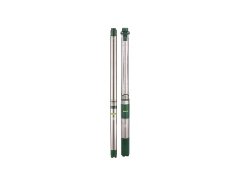
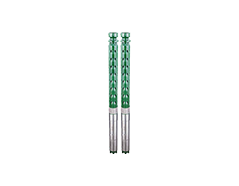
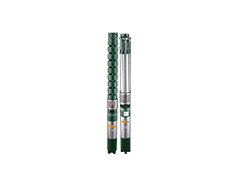
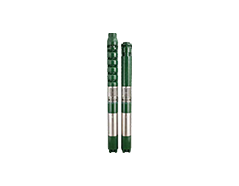
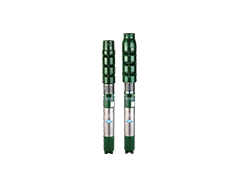
CRI Borewell Submersible Pumps
Basics of Borewell Pumpsets
A borewell pump has a motor at the bottom and pumps on
the top. The water entry is from the bottom of the pump
and flows upwards through many stages. The impellers
made up of stainless steel rotate inside the diffusers
with inherent guide vanes. With the help of the
diffusers, water is directed from one impeller to the
next impeller suction. Such a flow through each stage of
the impeller and diffuser increases the water pressure
at each stage and finally, water is discharged through
the outlet from the top.
CRI Borewell Submersible Pumpsets
The primary feature and a significant advantage of
borewell submersible pumps is their capability to be
submerged in water instead of being held above the
ground. Since the water pumps are already submerged they
don't need any priming. The water pressure itself moves
the water into the pump instead of using energy to pump
water. These borewell pumps can handle the fluctuation
of voltage comparatively well and are capable of
delivering water even at lower voltages.
Construction of Borewell Submersible Pump
C.R.I. Borewell Submersible Pumpsets are powered by a
water-filled, rewindable submersible motor that is
suitable for continuous operation. The stator is wound
with special waterproof synthetic film insulated copper
winding wires and made up of low watt loss silicon steel
laminations assembled under pressure and rigidly locked
in stainless steel stator shell. Borewell submersible
Pump components are specially designed for the best
possible hydraulic efficiency.
CRI Openwell Submersible Pumps
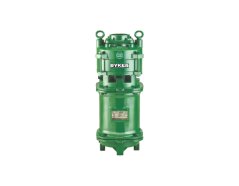
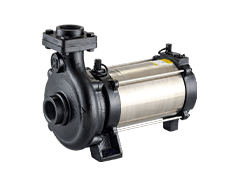
CRI Openwell submersible pumps are our most popular product and they offer exceptional value and reliable performance.
As the name indicates, a submersible pump is designed to be submerged within the fluid being pumped. They are also known as Submersible water pumps or Openwell submersible pumps. They measure up against jet pumps as they are not subject to variations in elevation. They work underwater and rest at the bottom of the well. Jet pumps are prone to cavitation. Openwell submersible pumps use significantly less power, as the fluid they pump is pushed and not pulled.
The prime part of the pump, the motor is sealed with polymers, 'O'rings, oil seals, and sand to prevent ingress of well water or salt into the motor. This feature helps in extending the durability of the submersible pump. The motor is prefilled with a cooler which regulates the temperature of the pump. A rubber diaphragm acts as a pressure equalizer and guards the motor against pressure and volume variation. The three-phase motor gives additional protection to all the electrical components.
CRI Openwell submersible pump offers higher water pulling capacity, functions at wide voltage fluctuation, and is easy to install and operate.
CRI Centrifugal Monoblock Pumps
Working Principles of a Centrifugal Monoblock
Pump
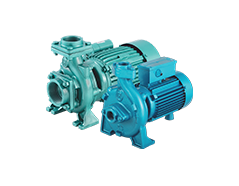
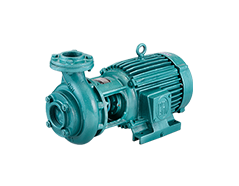
Centrifugal Monoblock pumps work on a very simple
mechanism. A centrifugal pump converts rotational energy
from a motor to energy in a moving fluid.
The two main parts that are responsible for the conversion of energy are the impeller and the casing. An impeller is the rotating part of a pump, and a casing is the airtight passage that surrounds the impeller. The fluid enters the casing, falls on the impeller blades at the eye of the impeller, and is whirled outward tangentially and radially until it leaves the impeller into the diffuser part of the casing. The fluid gains both velocity and pressure as it passes through the impeller.
Centrifugal Monoblock Pump Applications
Centrifugal monoblock pumps are mainly used for
agriculture, industrial, civil due to their consistency
and strength. Other domestic purpose applications in
which centrifugal pumps are widely used are gardens,
apartments, bungalows, small farms, hospitals, hotels,
agriculture, and farm-houses.
CRI Centrifugal Monoblock Pumps
CRI's Centrifugal Monoblock ACM/Virat and Jumbo series
construction of the motor frame with high quality
materials results in high performance with a good
suction lift characteristic and low temperature rise,
thereby increasing the life cycle of the motor. They
have been specially designed for high voltage
fluctuation and low power consumption.
CRI Regenerative Self Priming Monoset Pumps
Regenerative Self Priming Monoset Pumps
A self priming pump can turn the mixture of water and
air into a fluid that can be pumped. A regenerative self
priming pump overcomes the air binding issue with the
aid of an in-built water reservoir. Regenerative self
priming pumps are used in applications such as domestic,
commercial washing, garden and civil applications.
Working Principles of a Self Priming Monoset
Pump
During the priming cycle, air enters the pump and mixes
with water at the impeller. Water and air are discharged
together by centrifugal action of the impeller into the
water reservoir. When the pumping begins recirculation
of water within the pumps ceases. The process of
self-priming will start only when the pump starts the
next time.
Features of CRI REGENERATIVE SELF PRIMING MONOSET
PUMP
C.R.I. Selfy Regenerative Self priming Monoset Pumps are
powered by a totally enclosed fan cooled (TEFC) and
screen Protected Drip Proof (SPDP) AC induction two
poles and four pole motors suitable for continuous duty.
The motor stator is made of low-watt loss silicon steel lamination. Construction of motor frame and usage of quality materials result in high performance and low-temperature rise, thereby increasing the life cycle of the motor.
The windings are of high-grade enameled copper wire and are varnish impregnated. Construction of motor frames and usage of quality materials result in high performance, noise-free operation, and low-temperature rise thereby increasing the life cycle of the motor. Pumps volute chamber and impellers are designed to give the best possible hydraulic efficiency and suction lift characteristics.
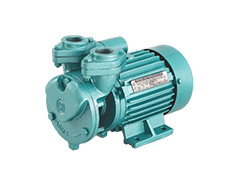
CRI Centrifugal Jet Self-priming Pumps
Centrifugal pumps which have the ability to pump mixtures of water and air as well as to vent the suction line of air, are deemed to be self-priming pumps. With the addition of a check valve in the suction pipework, standard centrifugal pumps can be self-priming if the casing is filled with water upon startup. Thus, the suction pipework cannot drain water.
Centrifugal jet self priming pumps are used in applications such as shallow well, small farms, domestic, pressure boosting, gardens, fertigation and drinking water supply.
Feature of CRI Centrifugal Jet Self-Priming Pump
series
C.R.I. Jet Self Priming pump sets pump casing and
ejector unit are designed carefully to give the best
possible hydraulic efficiency and suction lift
characteristics. These pump sets are powered by a
totally enclosed fan cooled AC induction motor, suitable
for continuous duty.
Motor stator is made of low watt loss ferro silicon steel lamination assembled under pressure and rigidly locked in the frame. The varnish impregnated windings made of enameled copper wire offer excellent resistance. Construction of motor frame and usage of quality materials result in high performance and low temperature rise, thereby increasing the life cycle of the motor.
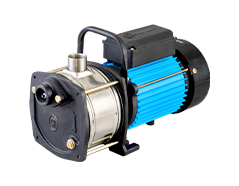
CRI Selfpriming Non-Clog Monoblock Pumpset
What are self-priming pumps?
Self-priming monoblock pumps are versatile and efficient
pumping solutions that are designed to meet a wide range
of water pumping needs. They feature a compact monoblock
design that combines the motor and pump into a single
unit, making them easy to install and maintain. The
self-priming capabilities of these pumps allow them to
start pumping immediately, reducing downtime and
increasing efficiency. These pumps can handle both clear
and contaminated water, making them suitable for a
variety of applications such as water supply,
irrigation, and pressure boosting. They offer efficient
performance with low energy consumption and can handle a
wide range of flow rates and head pressures. Overall, a
self-priming monoblock pump provides a reliable and
cost-effective solution for water pumping needs,
reducing the need for frequent repairs and replacements
Working principle of Self-priming pumps
Self-priming pumps work by creating a partial vacuum
that allows the pump to draw in water and air. This
vacuum is created by the pumping action of the impeller,
which pulls the water and air into the pump's casing.
The water and air are then separated by the pump's
casing and the water is expelled through the discharge
port while the air is expelled through the vent. This
process is repeated continuously until the suction pipe
is completely filled with water, at which point the pump
is said to be fully primed. Once the pump is primed, it
can continue to pump water without having to refill the
suction pipe. The self-priming cycle can take a few
minutes, depending on the pump's size, flow rate, and
the length of the suction pipe. Self-priming pumps are
designed to maintain their prime even if the flow rate
decreases or stops temporarily, allowing them to start
pumping immediately when water is needed.
Features of self priming pump
Non-clogging impellers in CRI self priming pumps
guarantee the unobstructed movement of solids, ensuring
a smooth flow. These self priming monoblock pumps are
designed to handle solids up to 8.5mm, making them ideal
for applications that require the transfer of dense
materials. Additionally, these pumps come equipped with
a quick and automatic self-priming function, eliminating
the need for a foot valve. This makes starting and
stopping the self priming water pump much easier and
more convenient. Maintenance of these pumps is also made
simpler due to the back-pull out design, which allows
for quick and easy access to the internal components.
Furthermore CRI self priming monoblock pumps are
energy-efficient, which results in more energy savings
and lower operating costs over time.
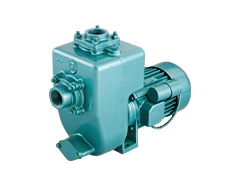
CRI Compressor Pumps
C.R.I. Compressor Pumps are designed for domestic and industrial purposes with high operating efficiency and work at a depth of up to 200 feet. The compressor is coupled with high-quality motors to ensure efficient performance. It works on the principle of difference in density of two-inter-connected water columns and the heavier one over balancing the lighter one operation. The Compressed air is pumped down into the well and gets mixed with water into the delivery pipe as very fine air bubbles by the air – distributor installed at the end of the air pipeline. This air-water mixture has a low density than the surrounding water column rises in the discharge pipe. In continuation of this process, water is pumped through the discharge pipe. These pumps are robust in construction and tested at high standard excellence.
Features of CRI Compressor Pumps- Mono and Belt
Compressor
Each CRI compressor pump features a detachable cylinder,
making cleaning simple. A fool-proof indicator is
included to check the oil level clearly as needed. They
are compactly designed and available in single and
double-cylinder designs.
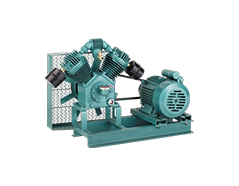
CRI Deepwell Centrifugal Jet Pumps
A deep well centrifugal jet pump is designed for pumping application that requires strong suction in a vertical depth from deep wells above 25 feet. In deep well jet pumps, the pumps are connected to the long pipelines which extend into the deep ground. These pipelines are connected to the impeller. With an impeller and diffuser fitted inside the well, the impeller circulates water through Jet system, to deliver high volume water discharge to overhead tanks in households. The main advantages of Deepwell pumps are that they can be placed at a distance from the water source and can be adjusted to pump the water from varying suction heads. They have a long life span and can be easily maintained.
Applications of Deep Well Centrifugal Jet
Pumps
Mostly deep well jet pumps are used for domestic needs,
farming, gardening and civil applications.
Features of CRI DEEP WELL CENTRIFUGAL JET PUMPS AJ &
BP SERIES
C.R.I. Deep Well Jet Centrifugal pumpsets volute chamber
and impellers are designed to give the best possible
hydraulic efficiency and suction lift characteristics.
These Pumpsets are powered by a totally enclosed fan
cooled (TEFC) and screen protected drip proof (SPDP), AC
induction two pole motor, suitable for continuous duty.
Motor stator is made of low watt loss ferro silicon steel lamination. The winding are high grade enameled copper wire and are varnish impregnated. Construction of motor frame and usage of quality materials result in high performance and low temperature rise, thereby increasing the life cycle of the motor.
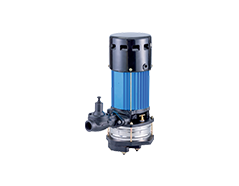
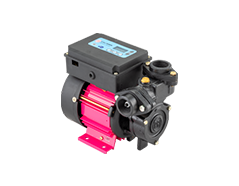
CRI I-Smart Pumps
What are Smart pumps
Smart pumps are an integrated system with an inbuilt
timer and water level monitor, automatic on/off, and a
Digital LED display that displays useful data like run
time and last run duration. Smart pumps protect the pump
from dry runs, overload and voltage fluctuations. Smart
pumps help in lowering power consumption.
Application of Smart Pumps
Smart Pumps can be used for household water
applications, small gardens, civil applications and
pressure boosting systems.
Features of CRI I Smart Pumps
C.R.I. proudly introduces the new Intelligence Smart
Mini Pump with complete solution of water pumping.
i-SMART pumps are specially designed for efficient and
trouble-free performance. The integrated system protects
the pump from a dry run operation, overload fault, and
sudden voltage variation. The pump controller unit is
equipped with an inbuilt timer that helps run the pump
in real-time and at scheduled times. This feature
enhances the effective running of the pump and lowers
power consumption. The digital LED display embedded in
the Smart pump supports to set the time and helps to
monitor the voltage and current values. Float switch
senses the over head tank water level and runs the pump
automatically.
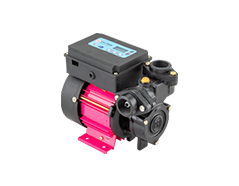
CRI Mini Pumps
Basics of Mini Pump
A mixture of water air is used to reach a state of the
fully primed pump. A low-pressure zone at the center is
created, when the impeller located inside the casing
rotates. The pressure difference inside the casing and
the outside air causes a suction effect that results in
water moving up the suction pipe. The self-priming pump
mixes the air with recirculating water, all the air in
the suction pipe is displaced and the water is
discharged.
Features of CRI Mini Pumps
CRI Self priming mini monoblock pumps are power driven
by totally enclosed fan cooled AC induction two pole
motor, suitable for continuous duty. Motor stator is
made of low watt loss silicon laminations assembled
under pressure and rigidly locked in the frame. The
windings are of high grade enameled copper wire and are
varnish impregnated. Construction of motor frames and
usage of quality materials result in high performance,
noise free operation and low temperature rise thereby
increasing the life cycle of the motor. The mini pumps
volute chamber and impellers are designed to give the
best possible hydraulic efficiency and suction lift
characteristics. Non-self priming pumps with end suction
and radial delivery.
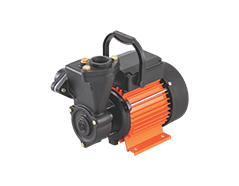
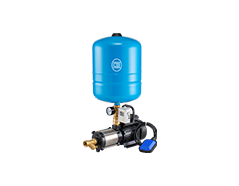
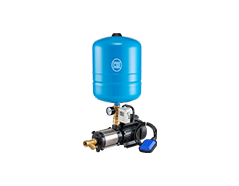
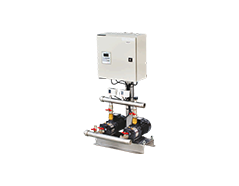
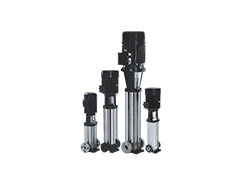
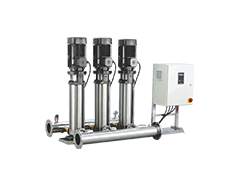
CRI Pressure Booster System
How does a Pressure Booster Pump work?
Pressure Booster pumps work by adding an additional pump
to the fluid flow system in order to increase water
pressure. Therefore, these pumps work like any other
ordinary pump.
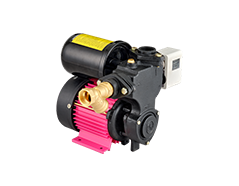
Typically, these are centrifugal pumps that take water from a source and move it through an impeller (single-stage) or multiple impellers (multi-stage) to increase water pressure. The high-pressure water is then discharged through an outlet.
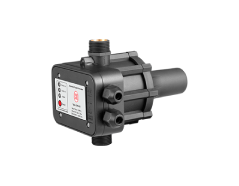
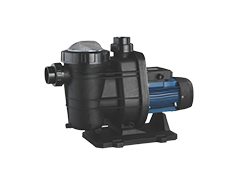
CRI Swimming Pool Pumps
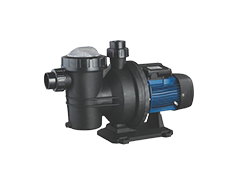
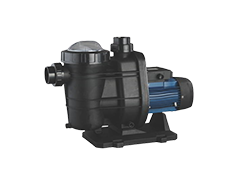
Swimming pool pumps are widely used for circulating and filtering water in the pools. A swimming pool pump is a centrifugal pump integrated with built-in standard filters. The pump can be positioned above or below the mean water level of the swimming pool.
CRI swimming pool pumps come with perfect sealing systems and the dynamically balanced rotary parts ensure vibration and noise-free operation. These swimming pool pumps are made of high quality to enhance the life span and efficiency. CRI's swimming pool pumps are equipped with an in-Built thermal protector to protect the motor from adverse operating conditions.
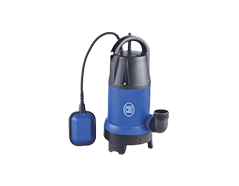
CRI Waste Water Pumps
Benefits of a Waste Water Pump
Waster water pumps require a small footprint
Their working principles are simple, and they can be
easily installed
Suspended matter in sewage can be transported without
getting clogged
Waste water pumps have a longer lifespan
Features of CRI Waste Water Pumps
C.R.I. has introduced highly efficient and reliable
sewage & drainage pumps in a comprehensive range.
Besides expanding its product portfolio, C.R.I. is
firmly committed to contributing a vital role in
creating more pleasant and affluent living conditions
worldwide, which is one of its ambitious goals. These
pumps are available with different materials of
construction and feature a multitude of applications in
wastewater handling and treatment.
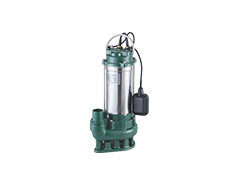
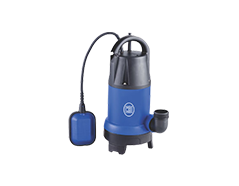
A submersible sewage pump from CRI offers features that support efficient waste handling. A sewage pump is a single-phase pump since power requirements are lower. Sewage pumps from CRI have impellers that are non-clog type and they allow solids up to 40mm diameter. They help in the free flow of solids. A cutter range is used in the design that handles fibrous solids effectively.
CRI Vertical Multistage Inline Pumps
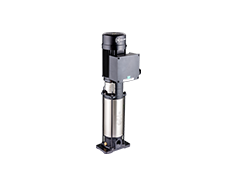
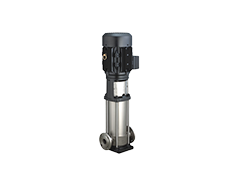
Application of Multistage inline pumps
Vertical Multistage pumps are installed in applications
where there is requirement for high pressure. Some of
the applications are :
Industrial and Domestic pressure boosting
Reverse Osmosis
DM plant
Hot and Cold water coolant circulation
Boiler Feed
Industrial Washing
Fire fighting systems
Water supply in buildings and irrigation
Features of CRI Vertical Multistage Inline
pumps
C.R.I. Vertical Multistage Inline pumps are the products
of expertise gained from over four decades of
experience, endurance and workmanship. They are made of
high quality stainless steel and fitted with thermal
protector. The vibration level is low and operates
quietly. They provide enhanced hydraulic performance.
The vertical multistage pumps have a good compatibility
and are environment friendly.
C.R.I. products are engineered to perfection with utmost care and stringent quality control at all stages to ensure a trouble-free service.
CRI Horizontal Multistage Pumps
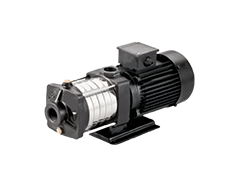
Horizontal Centrifugal Multistage pump can be used in applications where high water pressure is not required. They operate at low temperatures. The shafts are placed horizontally.The maximum operating pressure of these pumps is up to 10 Kg/cm2 and the flow range is from lm3 to 12m3. All wetted and rotating parts are manufactured in Stainless Steel, Cast Iron. A wide range of Seals are available for different applications.
CRI Submersible Sewage Pumps
C.R.I. manufactures energy-efficient wastewater submersible & surface dewatering pumps for powerful wastewater pumping applications. CRI's SL and SLC series are widely used sewage submersible pumps. The cutter series from CRI is used in handling waste from the food and beverage industry and hospitals.
Centrifugal pumps are most commonly used for pumping sewage. These pumps can be submerged in the fluid and can handle solid matters. The pumps used in sewage systems have a unique design that allows solids to pass through without clogging. The pump housing, which houses the motor and impeller, is made of corrosion-resistant material and is designed for long-term use.
Benefits of submersible sewage pumps
The construction of the submersible sewage pump is
compact. The pump and the motor share the same shafts,
hence it is easy to maintain. They have a small
footprint and work when submerged. This reduces the
project cost and is an energy saver. Sewage pumps come
with a float switch or other liquid level switches that
have the ability to control the start and stop of the
pump according to the level of liquid. Personnel to
supervise is not required and they are convenient to
use.
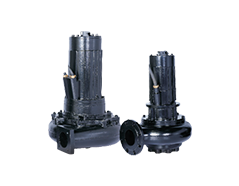
CRI Surface Wastewater Pumps
A surface water pump helps in pumping out water from a water body, like a well, a river, and transports it to different destinations. It can be used to pump water for domestic purposes, gardening, or for the removal of wastewater. Water is pushed up the pipe by impellers powered by the motor and then into a surface-mounted tank when the pressure switch is activated. The water is taken out with the help of rotating turbines or impellers which create a suction. A surface water pump can be used in a water body that measures 8m in depth or less.
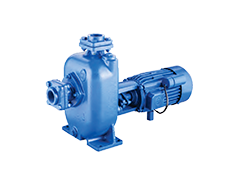
CRI Industrial Monoblock Pumps
A monoblock pump is an end suction pump that consists of a partially opened or closed impeller. It is a horizontal single-segment pump wherein all the revolving parts are fitted on a single shaft. Unlike couplings and belt drives, monoblock pumps have the unique feature of eliminating losses. An industrial monoblock pump is used in applications such as industrial washing and cleaning, wash down systems, vehicle washing tunnels, and fire protection systems.
BP/CT Series
What is an Industrial Monoblock Pump?
An industrial monoblock pump is a type of centrifugal
pump that is designed for industrial use. It is called a
"monoblock" pump because it is made of a single block of
metal, with the motor and pump casing integrated into a
single unit. This design offers several advantages,
including compact size, ease of installation, and
improved reliability. Monoblock pumps are commonly used
in industrial applications such as water supply in
commercial buildings, drinking water, industrial waste
water and so on
Benefits of Industrial Monoblock pumps
Compact design - As the motor and pump
are integrated into a single unit, these pumps take up
less space, making them ideal for use in small or
confined areas.
Easy installation: Monoblock pumps are
designed for ease of installation, and often do not
require any special tools or equipment.
Improved reliability: By integrating
the motor and pump, there are fewer connections and
parts, reducing the risk of failure and increasing the
overall reliability of the pump.
Durability: Industrial monoblock pumps
are made of high-quality materials, such as cast iron or
stainless steel, which makes them durable and able to
withstand harsh industrial environments.
Versatility: These pumps can handle a
variety of liquids and are suitable for different
applications, such as water transfer, irrigation, and
pressure boosting.
High efficiency: Monoblock pumps are
designed to be energy-efficient and can help to reduce
operating costs.
Maintenance-friendly: The compact
design and ease of access to the motor and pump make
maintenance and repairs simple and quick
Working Principle of Industrial Monoblock
pump
Industrial monoblock pumps work on the principle of
centrifugal force. The motor rotates the impeller, which
is inside the pump casing. As the impeller rotates, it
generates a centrifugal force that pushes the liquid
towards the outer edges of the impeller blades. The
liquid is then expelled from the pump casing through the
discharge outlet, creating a flow of liquid.
The flow of liquid is driven by the difference in pressure between the suction side of the pump and the discharge side. The liquid is drawn into the pump casing through the suction inlet, where it enters the eye of the impeller. As the impeller rotates, the liquid is expelled from the blades and is forced through the discharge outlet, creating a flow of liquid.
The design of the industrial monoblock pump ensures that the liquid is efficiently transported from one location to another, with a high flow rate and low pressure drop. The compact design, ease of installation, and improved reliability of the monoblock pump make it a popular choice for industrial applications.
Features of CRI Industrial Monoblock Pumps
CRI Industrial monoblock pumps are designed to offer
high operating efficiency, which results in lower power
consumption. They have good suction lift
characteristics, making them suitable for a variety of
applications. Single phase pump sets up to 2 HP are
equipped with an inbuilt thermal overload protector for
added safety. These pumps are also specially designed
for wide voltage operation, ensuring that they can
operate effectively in different electrical
environments. The rotating parts of the pump are
dynamically balanced, which minimizes vibrations and
extends the life of the pump. The back pull-out design
allows for easy servicing and repair, and the double
shield ball bearings eliminate the need for external
lubrication. CRI Industrial monoblock pumps are reliable
and cost-effective choice for industrial applications.
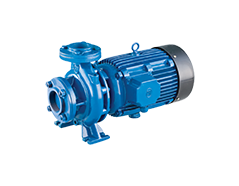
CRI Centrifugal Monoblock Selfpriming Pumps
Centrifugal Monoblock Self-priming pumps are precisely fabricated and made of SS -304 sheets. Since the wetted parts of the pump are made of stainless steel, the pumps are widely used in chemical and process industries. Centrifugal monoblock self-priming pumps are hygienic pump systems, and hence can be used in the dairy and food and beverage industries. The unique feature is it comes with a back pull-out design for easy servicing and repair.
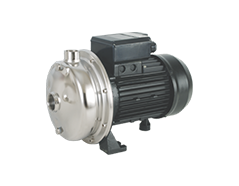
CRI End Suction Pumps
An end suction pump is a simple centrifugal pump with an optimized hydraulic design. The casing has suction at one end and the discharge on the other end. These pumps usually have only one impeller. The back pull-out design allows for ease of access and maintenance.
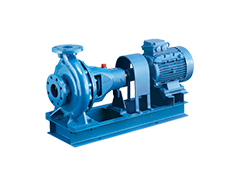
CRI Close Couple Pumps
In a close-coupled pump common motor and pump shaft are rigidly connected in a pump casing rather than being installed on pump feet. The construction of a close coupled pump is simple and does not involve any complex alignments. These pumps generally produce high flow pressure making them ideal for industry and water boosting applications.
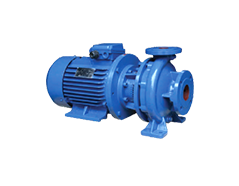
CRI Horizontal Split Case Pumps
The construction of a horizontal split case pump is rugged with a top pull-out casing design and a separate bearing housing. It has a dynamically balanced double suction low NPSH impeller. Horizontal split case pumps are particularly suitable for higher flow applications as it reduces thrust loads and allows for operation over a wide range of capacities.
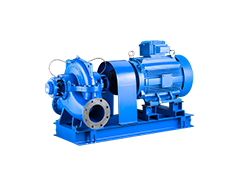
CRI Vertical Turbine Pumps
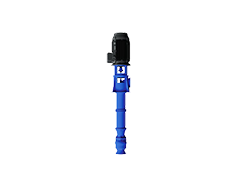
Vertical turbine pumps are mixed flow or a vertical axis centrifugal pump which include stages of rotating impellers & stationary bowls to process the guide vanes. Vertical pumps are utilized wherever the level of water pumping is under the volute centrifugal pump limits.
VTP Series
Uses of Verticle Turbine Pumps
Vertical turbine pumps have a small footprint, and there
are no priming issues (as long as minimum submergence
requirements are met) due to the impellers being
submerged in fluid. They are easily customized, and are
highly efficient on high head, low flow applications.
CRI Submersible Aerators
Submersible aerators are used at wastewater treatment facilities to aerate industrial wastewater and other water that needs treating. The principal function of the aerators is to produce tiny bubbles in the liquid that requires to be treated. The air required to produce the bubbles is drawn from above the surface of the liquid by furiously mixing air and liquid and then discharged outside. The aerated water will contain a high amount of dissolved oxygen. This process brings air and water into close contact thereby removing any organic volatile chemicals.
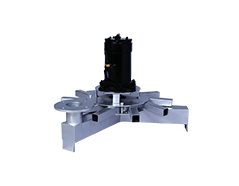
CRI Submersible Mixer
Submersible Mixers are used in sewage water aeration. Their main task is to prevent deposits from settling in the tanks. The liquid that requires treatment is put into motion, homogenizing its composition thereby preventing sedimentation. The liquid is set to motion again in the required flow of direction. Submersible mixers are used in sewage treatment plants, bio chemical processes and in the agriculture industry.
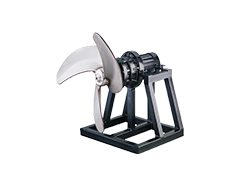
CRI Well Point De-Watering Pumps
A wellpoint dewatering pump is used for lowering or controlling the groundwater level in order to create a dry pit that is suitable for construction work. The use of a positive displacement pump guarantees a dry pit during site dewatering. Wellpoint Dewatering pumps are used in applications such as pipeline construction, civil construction, and the mining industry.
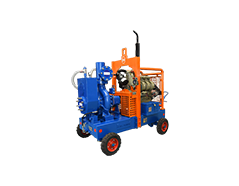
CRI Vertical Immersible Pumps
Unlike a submersible pump, immersible pumps can handle the corrosive nature of the liquid. The motor is mounted above the tank with an extended shaft to the pump end at the bottom of the sump. These pumps are built to resist clean or solids laden with corrosive, acidic, or alkali liquids. They can be used in applications such as sump emptying, recirculation, and transfer. Since every sump is unique in size, vertical immersible pumps can be custom built to specification.
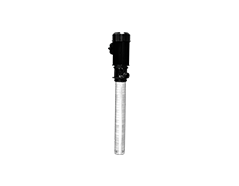
CRI Vertical Sump Pumps
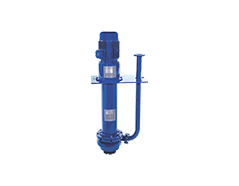
In the industrial pumping industry, vertical sump pumps are used to pump liquids containing large solids, fibrous slurries, and clean or lightly contaminated liquids. The pumping head is suspended into the pumped liquids and the drive motor is dry installed on the top. There is a separate discharge pipe and support pipe column on the pump. The vertical sump pump consists of a vertical line shaft with slide bearings or a cantilever design without slide bearings.
CRI Nextgen Pumps
CRI's Nextgen pumps include pressure booster pumps, sewage pumps, and waste water pumps. When there is a need for additional pressure, there is no better choice than CRI Pressure booster system. The pressure booster systems are equipped with high quality pressure tanks, switches, and thermal protectors. The wide assortment of submersible sewage pumps from CRI is capable of handling untreated sewage and can be used for both industrial and municipal waste. Waste water pumps from CRI are built to remove excess water at work sites to provide a safe and good working environment.